Methamphetamine (methylamphetamine or desoxyephedrine), popularly shortened to meth and also nicknamed "ice" and Tina, is a psychostimulant and sympathomimetic drug. The dextrorotatory isomer dextromethamphetamine can be prescribed to treat attention-deficit hyperactivity disorder, though unmethylated amphetamine is more commonly prescribed. Narcolepsy and obesity can also be treated by the aforementioned isomer under the brand name Desoxyn. It is considered a second line of treatment, used when amphetamine and methylphenidate cause the patient too many side effects. It is only recommended for short term use (~6 weeks) in obesity patients because it is thought that the anorectic effects of the drug are short lived and produce tolerance quickly, whereas the effects on CNS stimulation are much less susceptable to tolerance. It is also used illegally for weight loss and to maintain alertness, focus, motivation, and mental clarity for extended periods of time, and for recreational purposes.
Methamphetamine enters the brain and triggers a cascading release of norepinephrine, dopamine and serotonin. To a lesser extent methamphetamine acts as a dopaminergic and adrenergic reuptake inhibitor and in high concentrations as a monamine oxidase inhibitor (MAOI). Since it stimulates the mesolimbic reward pathway, causing euphoria and excitement, it is prone to abuse and addiction. Users may become obsessed or perform repetitive tasks such as cleaning, hand-washing, or assembling and disassembling objects. Withdrawal is characterized by excessive sleeping, eating and depression-like symptoms, often accompanied by anxiety and drug-craving.[2] Users of methamphetamine often take one or more benzodiazepines as a means of "coming down".
History
Methamphetamine was first synthesized from ephedrine in Japan in 1893 by chemist Nagayoshi Nagai.[3] In 1919, crystallized methamphetamine was synthesized by Akira Ogata via reductionephedrine using red phosphorus and iodine. The related compound amphetamine was first synthesized in Germany in 1887 by Lazăr Edeleanu. of
World War II
One of the earliest uses of methamphetamine was during World War II when the German military dispensed it under the trade name Pervitin.[4] It was widely distributed across rank and division, from elite forces to tank crews and aircraft personnel. Chocolates dosed with methamphetamine were known as Fliegerschokolade ("flyer's chocolate") when given to pilots, or Panzerschokolade ("tanker's chocolate") when given to tank crews. From 1942 until his death in 1945, Adolf Hitler was given daily intravenous injections of methamphetamine by his personal physician, Theodor Morell as a treatment for depression and fatigue. It is possible that it was used to treat Hitler's speculated Parkinson's disease, or that his Parkinson-like symptoms which developed from 1940 onwards were related to use of methamphetamine.[5]
Post-war use
After World War II, a large supply of amphetamine, formerly stockpiled by the Japanese military, became available in Japan under the street name shabu (also Philopon, pronounced ヒロポン, or Hiropon, a tradename)[6]. The Japanese Ministry of Health banned it in 1951; and its prohibition is thought to have added to the growing yakuza-activities related to illicit drug production.[7] Today, methamphetamine is still associated with the Japanese underworld, but its usage is discouraged by strong social taboos.
In the 1950s there was a rise in the legal prescription of methamphetamine to the American public. According to the 1951 edition of Pharmacology and Therapeutics by Arthur Grollman, it was to be prescribed for "narcolepsy, post-encephalitic Parkinsonism, alcoholism, ... in certain depressive states... and in the treatment of obesity."
The 1960s saw the start of significant use of clandestinely manufactured methamphetamine as well as methamphetamine created in users' own homes for personal use. The recreational use of methamphetamine peaked in the 1980s. The December 2, 1989 edition of The EconomistSan Diego, California as the "methamphetamine capital of North America."[citation needed] described
In 2000, The Economist again described San Diego, California as the methamphetamine capital of North America, and South Gate, California as the second capital city.
Legal restriction in the United States
In 1983 laws were passed in the United States prohibiting possession of precursors and equipment for methamphetamine production; this was followed a month later by a bill passed in Canada enacting similar laws. In 1986 the U.S. government passed the Federal Controlled Substance Analogue Enforcement Act in an attempt to curb the growing use of designer drugs. Despite this, or perhaps in part because of this, usage of methamphetamine expanded throughout rural United States, especially through the Midwest and South.
Since 1989 five federal laws and dozens of state laws have been imposed in an attempt to curb the production of methamphetamine. Methamphetamine can be produced in home laboratories using pseudoephedrine or ephedrine, the active ingredients in over-the-counter drugs such as Sudafed and Contac. However, preventative legal strategies of the past 17 years have steadily increased restrictions to the distribution of pseudoephedrine/ephedrine-containing products.
As a result of the Combat Methamphetamine Epidemic Act of 2005, a subsection of the PATRIOT Act, there are restrictions on the amount of pseudoephedrine and ephedrine one may purchase in a specified time period, and further requirements that these products must be stored in order to prevent theft.[8]
Natural occurrence
Methamphetamine occurs naturally in Acacia berlandieri and possibly Acacia rigidula, trees which grow in west Texas. Acacia trees contain numerous other psychoactive compounds (ex.amphetamine, mescaline, nicotine, DMT, ...[9]), but scientific papers specifically mentioning the presence of methamphetamine did not exist until 1997 and 1998.[10]
Pharmacology
Methamphetamine is a potent central nervous system stimulant which affects neurochemical mechanisms responsible for regulating heart rate, body temperature, blood pressure, appetite, attention, mood and responses associated with alertness or alarm conditions. The acute effects of the drug closely resemble the physiological and psychological effects of an epinephrine-provoked fight-or-flight response, including increased heart rate and blood pressure, vasoconstrictionbronchodilation, and hyperglycemia (increased blood sugar). Users experience an increase in focus, increased mental alertness, and the elimination of fatigue, as well as a decrease in appetite. (constriction of the arterial walls),
The methyl group is responsible for the potentiation of effects as compared to the related compound amphetamine, rendering the substance on the one hand more lipid soluble and easing transport across the blood brain barrier, and on the other hand more stable against enzymatic degradation by MAO. Methamphetamine causes the norepinephrine, dopamine and serotonin(5HT) transporters to reverse their direction of flow. This inversion leads to a release of these transmitters from the vesicles to the cytoplasm and from the cytoplasm to the synapse (releasing monoamines in rats with ratios of about NE:DA = 1:2, NE:5HT= 1:60), causing increased stimulation of post-synaptic receptors. Methamphetamine also indirectly prevents the reuptake of these neurotransmitters, causing them to remain in the synaptic cleft for a prolonged period (inhibiting monoamine reuptake in rats with ratios of about: NE:DA = 1:2.35, NE:5HT = 1:44.5[11]).
Methamphetamine is a potent neurotoxin, shown to cause dopaminergic degeneration.[12][13]reactive oxygen species such as hydrogen peroxide. It is likely that the oxidative stress that occurs after taking methamphetamine mediates its neurotoxicity. [14] It has been demonstrated that a high ambient temperature increases the neurotoxic effects of methamphetamine.[15] High doses of methamphetamine produce losses in several markers of brain dopamine and serotonin neurons. Dopamine and serotonin concentrations, dopamine and 5HT uptake sites, and tyrosine and tryptophan hydroxylase activities are reduced after the administration of methamphetamine. It has been proposed that dopamine plays a role in methamphetamine induced neurotoxicity because experiments which reduce dopamine production or block the release of dopamine decrease the toxic effects of methamphetamine administration. When dopamine breaks down it produces
Recent research published in the Journal of Pharmacology And Experimental Therapeutics (2007) [2], indicates that methamphetamine binds to a group of receptors called TAAR. TAAR is a newly discovered receptor system which seems to be affected by a range of amphetamine-like substances called trace amines.
Effects
Common immediate effects.:[16]
- Euphoria
- Increased energy and attentiveness
- Diarrhea, nausea
- Excessive sweating
- Loss of appetite, insomnia, tremor, jaw-clenching (Bruxism)
- Agitation, compulsive fascination with repetitive tasks (Punding)
- Talkativeness, irritability, panic attacks
- Increased libido
Side effects associated with chronic use:
Side effects associated with overdose:
Death from overdose is usually due to stroke, heart failure, but can also be caused by cardiac arrest (sudden death) or hyperthermia.
Buffenstein et al. (1997) showed through SPECT scanning of methamphetamine abusers in Hawaii that brain deterioration continues for months after abstinence, possibly suggesting another unique and pathological feature of methamphetamine.
Pharmacokinetics
The half life of methamphetamine is 9-15 hours. It is excreted by the kidneys and its half life depends on urinary pH. One of the metabolites of methamphetamine is amphetamine. [17]
Tolerance
As with other amphetamines, tolerance to methamphetamine is not completely understood, but known to be sufficiently complex that it cannot be explained by any single mechanism. The extent of tolerance and the rate at which it develops varies widely between individuals, and even within one person it is highly dependent on dosage, duration of use and frequency of administration. Many cases of narcolepsy are treated with methamphetamine for years without escalating doses or any apparent loss of effect.
Short term tolerance can be caused by depleted levels of neurotransmitters within the vesiclessynaptic cleft following subsequent reuse (tachyphylaxis). Short term tolerance typically lasts until neurotransmitter levels are fully replenished, because of the toxic effects on dopaminergic neurons, this can be greater than 2-3 days. Prolonged overstimulation of dopamine receptors caused by methamphetamine may eventually cause the receptors to downregulate in order to compensate for increased levels of dopamine within the synaptic cleft.[18] To compensate, larger quantities of the drug are needed in order to achieve the same level of effects. available for release into the
Addiction
Methamphetamine is addictive[19], especially when injected or smoked.[20] While not life-threatening, withdrawal is often intense and, as with all addictions, relapse is common. To combat relapse, many recovering addicts attend 12 Step meetings, such as Crystal Meth Anonymous.
Methamphetamine-induced hyperstimulation of pleasure pathways leads to anhedonia. Former users have noted that they feel stupid or dull when they quit using methamphetamine. It is possible that daily administration of the amino acids L-Tyrosine and L-5HTP/Tryptophan can aid in the recovery process by making it easier for the body to reverse the depletion of Dopamine, Norepinephrine, and Serotonin. Although studies involving the use of these amino acids have shown some success, this method of recovery has not been shown to be consistently effective.
It is shown that taking ascorbic acid prior to using methamphetamine may help reduce acute toxicity to the brain, as rats given the human equivalent of 5-10 grams of ascorbic acid 30 minutes prior to methamphetamine dosage had toxicity mediated, yet this will likely be of little avail in solving the serious behavioral problems associated with methamphetamine use that create many of the problems the users experience.[citation needed] Large doses of ascorbic acid also lower urinary pH, reducing methamphetamine's elimination half-life[citation needed].
To combat addiction, doctors are beginning to use other forms of amphetamine such as dextroamphetamine to break the addiction cycle in a method similar to methadone for heroinnaloxone, which blocks opiate receptors and is therefore used in treating opiate dependence, for use with methamphetamine problems.[21] However, experiments with some monoamine reuptake inhibitors such as indatraline have been successful in blocking the action of methamphetamine.[22] There are studies indicating that fluoxetine, bupropion and imipramine may reduce craving and improve adherence to treatment.[23] Research has also suggested that modafinil can help addicts quit methamphetamine use.[24] [25] addicts. There are no publicly available drugs comparable to
Since the phenethylamine phentermine is a constitutional isomer of methamphetamine, it has been speculated that it may be effective in treating methamphetamine addiction. Although phenteremine is a central nervous stimulant that acts on dopamine and norepinephrine, it has not been reported to cause the same degree of euphoria that is associated with other amphetamines.
Abrupt interruption of chronic methamphetamine use results in the withdrawal syndrome in almost 90% of the cases. Withdrawal of amphetamine often causes a depression which is longer and deeper than even the depression from cocaine withdrawal.[23]
Medical use
d-Methamphetamine
Methamphetamine is used medically under the brand name Desoxyn for the following conditions:
Because of its social stigma and toxicity, Desoxyn is not generally prescribed for ADHD unless other stimulants, such as methylphenidate (Ritalin®), dextroamphetamine (Dexedrine®) or mixed amphetamines (Adderall®) have failed.
Related Health Issues
In an article about his son's addiction to methamphetamine, California writer and former methamphetamine user David Schiff said "This drug has a unique, horrific quality." In an interview, Stephan Jenkins, the singer in the band Third Eye Blind, said that methamphetamine makes you feel "bright and shiny."
It also makes you paranoid, incoherent and both destructive and pathetically and relentlessly self-destructive. Then you will do unconscionable things in order to feel bright and shiny again.[26]
Meth mouth
-
Methamphetamine addicts may lose their teeth abnormally quickly, a condition known as "meth mouth". This effect is not caused by any corrosive effects of the drug itself, which is a common myth. According to the American Dental Association, meth mouth "is probably caused by a combination of drug-induced psychological and physiological changes resulting in xerostomia (dry mouth), extended periods of poor oral hygiene, frequent consumption of high calorie, carbonated beverages and tooth grinding and clenching."[27] Similar, though far less severe symptoms have been reported in clinical use of other amphetamines, where effects are not exacerbated by a lack of oral hygiene for extended periods.[28]
Like other substances which stimulate the sympathetic nervous system, methamphetamine causes decreased production of acid-fighting saliva and increased thirst, resulting in increased risk for tooth decay, especially when thirst is quenched by high-sugar drinks.[29]
Hygiene
Serious health and appearance problems are caused by unsterilized needles, lack of hygiene, and especially pollutants in street-grade methamphetamine. The use of methamphetamine may lead to hypertension, damage to heart valves, vastly deteriorated dental health, and increased risk of strokes.[30] Obsessive skin-picking by chronic methamphetamine users may lead to abscesses.[23]
Sexual behaviour
-
Users may exhibit sexually compulsive behaviour while under the influence. This disregard for the potential dangers of unprotected sex or other reckless sexual behavior may contribute to the spread of sexually transmitted infections (STIs) or sexually transmitted diseases (STDs).
Among the effects reported by methamphetamine users are increased libido and sexual pleasure, the ability to have sex for extended periods of time, and an inability to ejaculate or reach orgasm[31] or physical release. In addition to increasing the need for sex and enabling the user to engage in prolonged sexual activity, methamphetamine lowers inhibitions and may cause users to behave recklessly or to become forgetful. Users may even report negative experiences after prolonged use, which contradict reported feelings, thoughts, and attitudes achieved at similar dosages under similar circumstances but at earlier periods of an extended or prolonged cycle.
Additionally, many chronic users find themselves engaging in excessive and repeated masturbation. According to a recent San Diego study[citation needed], methamphetamine users often engage in unsafe sexual activities, and forget or choose not to use condoms. The study found that methamphetamine users were six times less likely to use condoms. The urgency for sex combined with the inability to achieve release (ejaculation) can result in tearing, chafing, and trauma (such as rawness and friction sores) to the sex organs, the rectum and mouth, dramatically increasing the risk of transmission of HIV and other sexually transmitted diseases. Methamphetamine also causes erectile dysfunction due to vasoconstriction.
Epidemiology of methamphetamine abuse
In the US methamphetamine use is the highest in Native Hawaiians and Pacific islanders (2.2%) and Native Americans (1.7%), lower among whites (0.7%) and Hispanics (0.5%), and much lower in Asians (0.2%) and blacks (0.1%). According to one study in large cities, 13% of men having sex with men used methamphetamine in the previous 6 months.[23]
Use in pregnancy and breastfeeding
Methamphetamine passes through the placenta and is secreted in the breast milk. Half of the newborns whose mothers used methamphetamine during pregnancy experience withdrawal syndrome; this syndrome is relatively mild and required medication in only 4% of the cases.[23]
Routes of administration
The usual route for medical use is oral administration. In recreational use, it can be swallowed, snorted, smoked, dissolved in water and injected (or even without water, in what is called a dry shot), inserted anally (with or without dissolution in water; also known as a booty bump or shafting), or into the urethra.[32] The potential for addiction is greater when it is delivered by methods that cause the concentration in the blood to rise quickly, principally because the effects desired by the user are felt more quickly and with a higher intensity than through a moderated delivery mechanism.
Studies have shown that the subjective pleasure of drug use (the reinforcing component of addiction) is proportional to the rate that the blood level of the drug increases.[citation needed] In general, smoking is the fastest mechanism (i.e., it causes the blood concentration to rise the most quickly in the shortest period of time as it allows the substance to travel to the brain through a more direct route than intravenous injection), followed by injecting, anal insertion, insufflation, and swallowing.
Smoking
"Smoking" amphetamines actually refers to vaporizing it to produce fumes, rather than burning and inhaling the resulting smoke, as with tobacco. It is commonly smoked in glass pipes, or in aluminum foil heated by a flame underneath. This method is also known as "chasing the whitechasing the dragon"). There is little evidence that Methamphetamine inhalation results in greater toxicity than any other route of administration. Lung damage has been reported with long-term use, but manifests in forms independent of route (pulmonary hypertension and associated complications), or limited to injection users (pulmonary emboli). dragon" (as derived from the method of smoking heroin known as "
Injection
Injection is a popular method for use, also known as slamming, but carries quite serious risks. The hydrochloride salt of methamphetamine is soluble in water; injection users may use any dose from 125 mg to over a gram, using a small needle. This dosage range may be fatal to non-addicts; addicts rapidly develop tolerance to the drug. Injection users often experience skin rashes (sometimes called "speed bumps") and infections at the site of injection. As with any injected drug, if a group of users shares a common needle or any type of injecting equipment without sterilization procedures, blood-borne diseases such as HIV or hepatitis can be transmitted as well.
Other methods

A Line of Methamphetamine Very little research has focused on suppository or anal insertion as a method, and anecdotal evidence of its effects is infrequently discussed, possibly due to social taboos in many cultures regarding the anus. This is often known within communities that use methamphetamine for sexual stimulation as a "butt rocket," "booty bump," "keistering,", "plugging," "shelving," or "bumming" and is anecdotally reported to increase sexual pleasure while the effects of the drug last.[33] The rectum is where the majority of the drug would likely be taken up, through the membranes lining its walls. (See Methamphetamine and sex for further information on other risk factors.) Another way of ingesting methamphetamine is to crush the crystals up and insufflate (snort) them. This also bypasses first pass metabolism and goes straight into the bloodstream.
Illicit production
Synthesis
Methamphetamine is most structurally similar to methcathinone and amphetamine. When illicitly produced, it is commonly made by the reduction of ephedrine or pseudoephedrine. Most of the necessary chemicals are readily available in household products or over-the-counter cold or allergy medicines. Synthesis is relatively simple, but entails risk with flammable and corrosive chemicals, particularly the solvents used in extraction and purification. Clandestine production is therefore often discovered by fires and explosions caused by the improper handling of volatile or flammable solvents.
Most methods of illicit production involve hydrogenation of the hydroxyl group on the ephedrinepseudoephedrine molecule. The most common method for small-scale methamphetamine labs in the United States is primarily called the "Red, White, and Blue Process", which involves red phosphorus, pseudoephedrine or ephedrine(white), and blue iodine, from which hydroiodic acid is formed. In Australia, criminal groups have been known to substitute 'red' phosphorus with either hypophosphorus acid or phosphorus acid [3]. or
This is a fairly dangerous process for amateur chemists, because phosphine gas, a side-product from in situ hydroiodic acid production, is extremely toxic to inhale. An increasingly common method uses the process of Birch reduction, in which metallic lithium, commonly extracted from non-rechargeable lithium batteries is substituted for metallic sodium, to circumvent the difficulty of procuring metallic sodium.
The Birch reduction, however, is dangerous because the alkali metal and liquid anhydrous ammonia are both extremely reactive, and the temperature of liquid ammonia makes it susceptible to explosive boiling when reactants are added. Anhydrous ammonia and lithium or sodium (Birch reduction) may be surpassing hydroiodic acid (catalytic hydrogenation) as the most common method of manufacturing methamphetamine in the US and possibly in Mexico. Hydroiodic acid "super lab busts" receive more media attention because the equipment employed is much more complex and visible than the glass jars or coffee carafes commonly used to produce methamphetamine with Birch reduction.
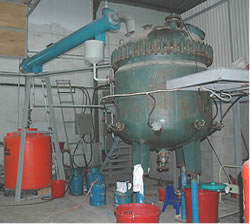
Industrial scale methamphetamine/MDMA factory in Cikande, Indonesia A completely different procedure of synthesis uses the reductive amination of phenylacetonemethylamine[4], both of which are currently DEA list I chemicals (as are pseudoephedrine and ephedrine). The reaction requires a catalyst that acts as a reducing agent, such as mercury-aluminum amalgam or platinum dioxide, also known as Adams' catalyst. This was once the preferred method of production by motorcycle gangs in California,[citation needed] until DEA restrictions on the chemicals have made this difficult. Other less common methods use other means of hydrogenation, such as hydrogen gas in the presence of a catalyst. with
Methamphetamine labs can give off noxious fumes, such as phosphine gas, methylamine gas, solvent vapors; such as acetone or chloroform, iodine vapors, white phosphorus, anhydrous ammonia, hydrogen chloride/muriatic acid, hydrogen iodide, lithium/sodium metal, ether, or methamphetamine vapors. If performed by amateurs, manufacturing methamphetamine can be extremely dangerous. If the red phosphorus overheats, because of a lack of ventilation, phosphine gas can be produced. This gas, if present in large quantities, is likely to explode upon autoignition from diphosphine, which is formed by overheating phosphorus.
Production and distribution
Until the early 1990s, methamphetamine for the US market was made mostly in labs run by drug traffickers in Mexico and California. Since then, authorities have discovered increasing numbers of small-scale methamphetamine labs all over the United States, mostly in rural, suburban, or low-income areas. Indiana state police found 1,260 labs in 2003, compared to just 6 in 1995, although this may be a result of increased police activity.[34] Recently, mobile and motel-based methamphetamine labs have caught the attention of both the US news media and the police.
These labs can cause explosions and fires, and expose the public to hazardous chemicals. Those who manufacture methamphetamine are often harmed by toxic gases. Many police departments have specialized task forces with training to respond to cases of methamphetamine production. The National Drug Threat Assessment 2006, produced by the Department of Justice, found "decreased domestic methamphetamine production in both small and large-scale laboratories", but also that "decreases in domestic methamphetamine production have been offset by increased production in Mexico." They concluded that "methamphetamine availability is not likely to decline in the near term."[35]
In July 2007, a ship was caught by Mexican officials at the port of Lázaro Cárdenas, originating in Hong Kong, after traveling through the port of Long Beach with 19 tons of pseudoephedrine, a raw material needed for meth.[36] The Chinese owner was found to have $206 million at his Mexico City mansion. It went undetected at Long Beach.

A rocket used by smugglers to quickly discard meth. Methamphetamine is distributed by prison gangs, Outlaw Motorcycle Gangs, street gangs, traditional organized crime operations, and impromptu small networks. In the U.S. illicit methamphetamine comes in a variety of forms, at an average price of $150 per gram for pure substance.[37] Most commonly it is found as a colorless crystalline solid. Impurities may result in a brownish or tan color. Colourful flavored pills containing methamphetamine and caffeine are known as yaa baa (Thai for "crazy medicine").
At its most impure, it is sold as a crumbly brown or off-white rock commonly referred to as "peanut butter crank."[38] Methamphetamine found on the street is rarely pure, but adulterated with chemicals that were used to synthesize it. It may be diluted or "cut" with non-psychoactive substances like inositol or dimethylsulfone. Another popular method is to combine methamphetamine with other stimulant substances such as caffeine or cathine into a pill known as a "Kamikaze", which is particularly dangerous due to the synergetic effects of multiple stimulants on the heart. It may also be flavored with high-sugar candies, drinks, or drink mixes to mask the bitter taste of the drug. Coloring may be added to the meth, as is the case with "Strawberry Quick."[39][40]
Legality
Australia
Strictly speaking, as a Schedule 8 drug, the medical use of methamphetamine is recognized in Australia, however in practice this is not the case. It is also known as Ice and has become the focus of a nation-wide crackdown. As of 2007, this has become part of the election agenda for both major political parties.
Canada
Methamphetamine is not approved for medical use in Canada. The maximum penalty for the production and distribution is imprisonment for life.
Hong Kong
Methamphetamine is regulated under Schedule 1 of Hong Kong's Chapter 134 Dangerous Drugs Ordinance. It can only be used legally by health professionals and for university research purposes. The substance can be given by pharmacists under a prescription. Anyone who supplies the substance without prescription can be fined $10000(HKD). The penalty for trafficking or manufacturing the substance is a $5,000,000 (HKD) fine and life imprisonment. Possession of the substance for consumption without license from the Department of Health is illegal with a $1,000,000 (HKD) fine and/or 7 years of jail time.
The Netherlands
Methamphetamine is not approved for medical use in The Netherlands. It falls under Schedule I of the Opium Act. Although production and distribution of this drug are prohibited, few people who were caught with a small amount for personal use have been prosecuted.
New Zealand
Methamphetamine is a Class "A" controlled drug under the Misuse of Drugs Act 1975. The maximum penalty for production and distribution is imprisonment for life. While in theory a doctor could prescribe it for an appropriate indication, this would require case-by-case approval by the director-general of public health. In New Zealand, Methamphetamine is most commonly referred to by the street name P.[41]
South Africa
In South Africa, methamphetamine is classified as a Schedule 5 drug, and is listed as Undesirable Dependence-Producing Substances in Part III of Schedule 2 of the Drugs and Drug Trafficking Act, 1992 (Act No 140 of 1992).[42] Commonly called Tik, it is mostly abused by youths under the age of 20 in the Cape Flats areas.[43]
United Kingdom
As of 18 January 2007,[44] methamphetamine is classified as a Class A drug under the Misuse of Drugs Act 1971 following a recommendation made by the Advisory Council on the Misuse of Drugs in June 2006.[45] It had previously been classified as a Class B drug, except when prepared for injection.
United States
Methamphetamine Lab Seizures in the US | Year | Seizures |
| 1999 | 7,438 |
| 2000 | 9,902 |
| 2001 | 13,357 |
| 2002 | 16,212 |
| 2003 | 17,356 |
| 2004 | 17,710 |
| 2005 | 12,484 |
| 2006 | 6,435 |
Methamphetamine is classified as a Schedule II substance by the Drug Enforcement Administration under the Convention on Psychotropic Substances.[46] It is available by prescription under the trade name Desoxyn, manufactured by Ovation Pharma. While there is technically no difference between the laws regarding methamphetamine and other controlled stimulants, most medical professionals are averse to prescribing it due to its notoriety.
Illicit methamphetamine has become a major focus of the 'war on drugs' in the United States in recent years. In addition to federal laws, some states have placed additional restrictions on the sale of precursor chemicals commonly used to synthesize methamphetamine, particularly pseudoephedrine, a common over-the-counter decongestant. In 2005, the DEA seized 2,148.6kg[47] In 2005, the Combat Methamphetamine Epidemic Act of 2005 was passed as part of the USA PATRIOT Act, putting restrictions on the sale of methamphetamine precursors. of methamphetamine.
On November 7, 2006, the US Department of Justice declared that November 30, 2006 be Methamphetamine Awareness Day.[48]
DEA El Paso Intelligence Center EPIC data is showing a distinct downward trend in the seizure of clandestine drug labs for the illicit manufacture of methampetamine from a high of 17,356 in 2003. Lab seizure data for the United States is available from EPIC beginning in 1999 when 7,438 labs were reported to have been seized during that calendar year.
Legality of similar chemicals
See pseudoephedrine and ephedrine for legal restrictions in place as a result of their use as precursors in the clandestine manufacture of methamphetamine.


